Surrounded by two armies, with his bow resting in his hands and tears in his eyes, Arjun turned to Krishna. He admitted something deeply human: “I am confused. I am weak. I cannot find a way out of this pain. Please tell me what is right — I am your disciple.” These four shlokas — 7, 8, 9, and 10 of Bhagavad Gita Chapter 2 — capture the rawest and most honest moment of Arjuna’s journey. He acknowledges his weakness. He admits his feelings have overpowered him. He surrenders. And in doing so, he opens the door to the most transformative wisdom ever recorded in human history — the Sankhya Yoga of Lord Krishna. Before diving into Krishna’s teachings, let’s go through Arjuna’s condition through the Sanskrit to English transliteration of Gita verse 2.7.
Kaarpanyadoshopahataswabhaavah
Prichchhaami Tvaam Dharm-Sammoodhchetaah |
Yachchhreyah Syaannishchitam Broohi Tanme
Shishyaste-aham Shaadhi Maam Tvaam Prapannam ||7||
English translation:
Having my nature besieged by the flaw (Vikar) of cowardice and confusion in my heart [and mind], I am asking you about my Dharm (duty). Please tell me what is decisively right to do, I am your disciple and am surrendered unto you.
Exegesis and Central Idea:
In Shlok 2 and Shlok 3, Shree Krishna had already called out Arjun’s behaviour. He said Arjun was acting like an Anarya — a non-righteous person. The reason was clear. Arjun’s excessive attachment to his family was weakening him from within. Krishna also told him not to behave like an impotent person. This has been explained in detail on our page of Bhagavad Gita Chapter 2 Shlok 3.
These words had an effect on Arjun. He began to realize that he was not conducting himself the way he should. He understood that his behaviour was falling short of what was right and expected of him. So he turned to Krishna and made a request. He asked Krishna to guide him. He wanted to know what the right thing to do was at that very moment. And he did something important — he accepted his own weakness. He acknowledged that his heart and mind were filled with feeling-based confusion. He admitted that this confusion was pulling him toward cowardice. And with that honest acceptance, he surrendered himself to Krishna’s guidance.
Let’s move on to what Arjun says next through the Bhagwat Geeta Shlok 8 of Chapter 2.
Na Hi Prapashyaami Mamapanudyad
Yachchhokmuchchhoshanamindriyaanaam |
Avaapya Bhoomavsampattnamriddham
Rajyam Suraanaamapi Chaadhipatyam ||8||
English translation:
I certainly don’t see any step-in-aid to annihilate this anguish that’s drying up (troubling) my senses. Even if I achieve an enemy-free and all-prosperous kingdom of the entire earth or even the lordship of the celestial gods (Those pure souls that work on the behalf of God to keep the universes operational).
Exegesis and Central Idea:
Arjun continued speaking to Krishna. He said that his feelings were so overwhelming that they were not letting him decide anything. Instead of bringing clarity, they were making him more and more vexed. He went further and said something striking. He said that even the thought of winning the entire earth — a kingdom free of all enemies and full of prosperity — could not move him. Even the thought of gaining lordship over the celestial gods could not push him to fight. His feelings were that powerful.
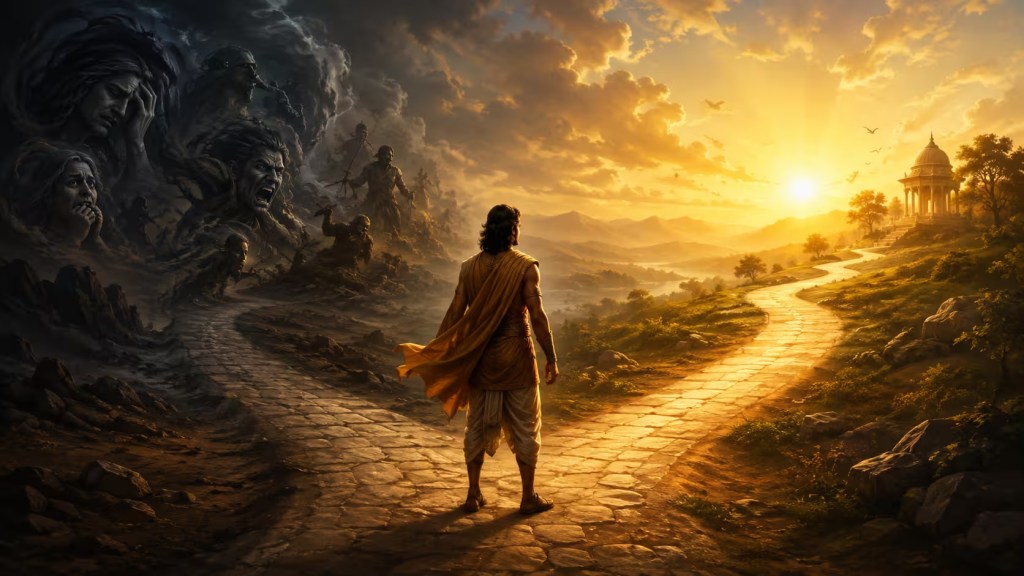
If we think about this carefully, we can see ourselves in Arjun’s situation. Many times, we too are unable to take the right path. Not because we don’t know what is right. But because some feeling stops us. It could be a personal feeling. It could be a religious feeling, a communal feeling, a hateful feeling, or even a terroristic feeling. These feelings enslave us. They block our ability to act on what is right.
This is exactly why we must study and deeply contemplate what Krishna taught Arjun in the following shlokas. That wisdom is not just for Arjun. It is for every human being who has ever been stopped from doing the right thing by their own feelings and thoughts. If we truly understand and absorb that teaching, we too can free ourselves from becoming slaves to such feelings.
After Arjun uttered what he was feeling, he sat on the chariot. To inform Dhritrashtra about it, Sanjay narrates the following Shlok.
Sanjay Uvaach
Evamuktvaa Hrisheekesham Gudaakeshah Parantapah |
Na Yotsya Iti Govindamuktvaa Tooshneem Babhoov Ha ||9||
English translation:
Sanjay Said,
After saying [all] this to Hrisheekesh (Shree Krishna), Gudakesh (Arjun), the chastiser of enemies, [further] said to Govind (Krishna) that he would not fight and went silent.
Exegesis and Central Idea:
After saying everything to Krishna, Arjun went silent. He had poured out all his feelings, all his anguish, and all his confusion. And then he simply sat back on the chariot. He — the one who was known as the destroyer of enemies of Dharm — clearly refused to fight. He said nothing more after that. Having voiced everything, he surrendered completely to Lord Krishna. This is what is known as complete surrender to God.
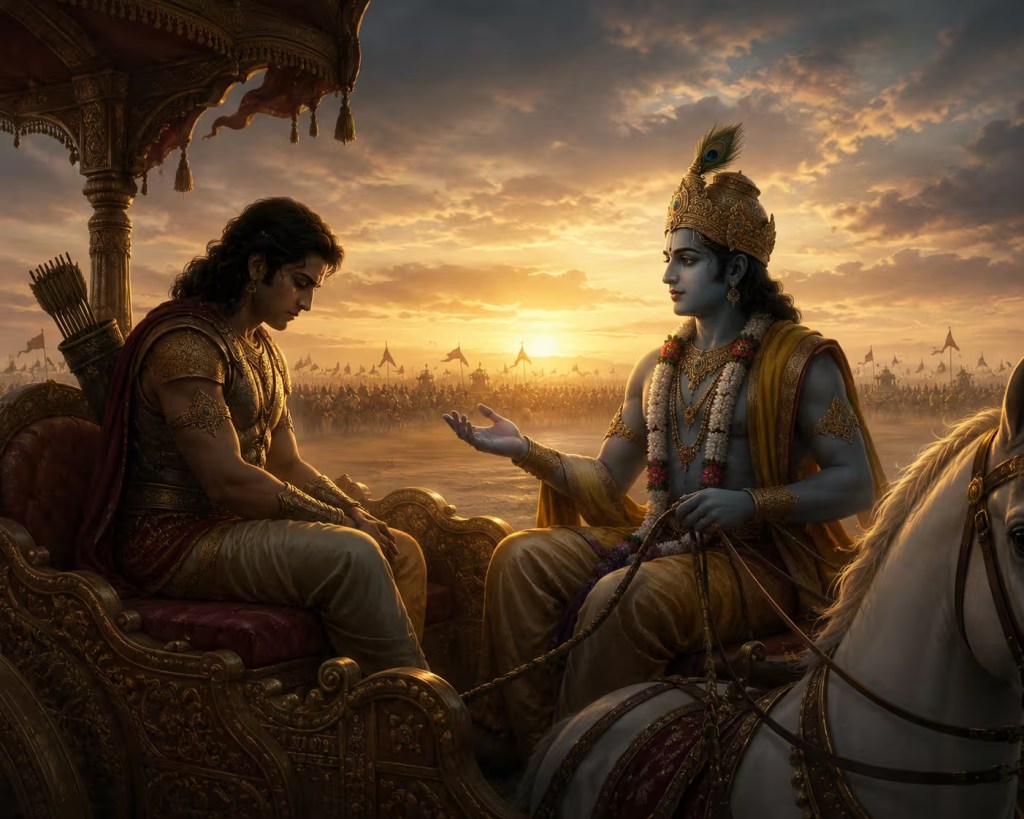
True surrender begins when the mind becomes silent before God.There is an important lesson here. When your feelings, traditions, and thought processes become so strong that they stop you from doing what is right — that is the moment to surrender to God. But surrender must be understood correctly. Surrendering to God does not mean simply saying “I will not fight” and sitting down. That is not surrender. That is giving up.
True surrender means following what God says. And what does God say? He says to first fight against your own feelings, traditions, and flawed thought processes. These are the real enemies. Once you defeat these inner enemies, nothing will be able to stop you from fighting against Adharma in the outside world. To help Arjun defeat these inner enemies, Shree Krishna preached Sankhyayog and Karmayog — and that teaching took the form of the Bhagavad Gita. Therefore, study this greatest of all books. Follow the guidelines Krishna gave for living life. That — and only that — is what true surrender to God actually means.
What Sanjay says next is as follows:
Tamuvaach Hrisheekeshah Prahsanniv Bhaarat |
Senayorubhayormadhye Visheedantamidam Vachah ||10||
English translation:
Oh Bharat (Dhritraashtra), Hrisheekesh (Shree Krishna) [then], in the middle of both armies, said these words to that dejected Bharat (Arjun).
Exegesis and Central Idea:
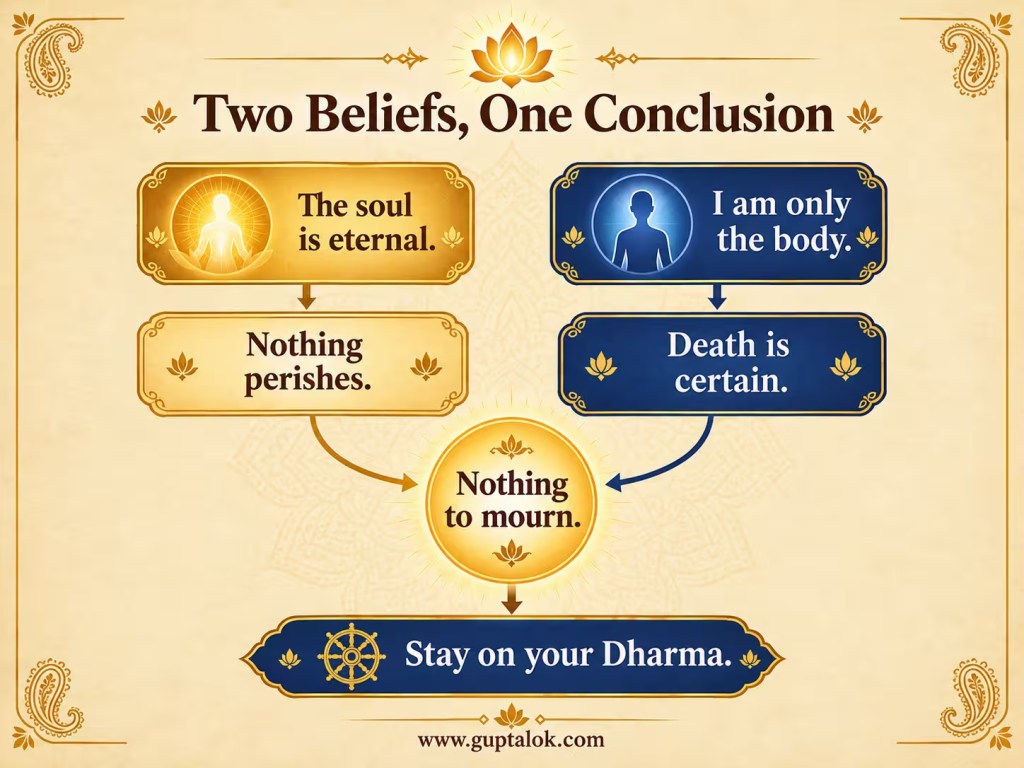
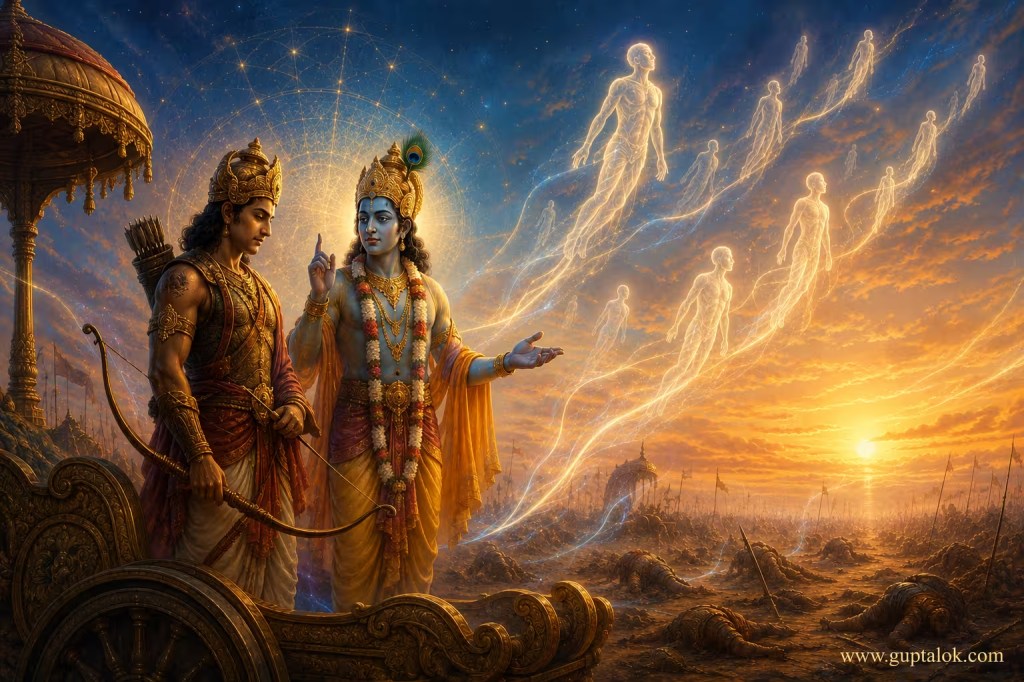
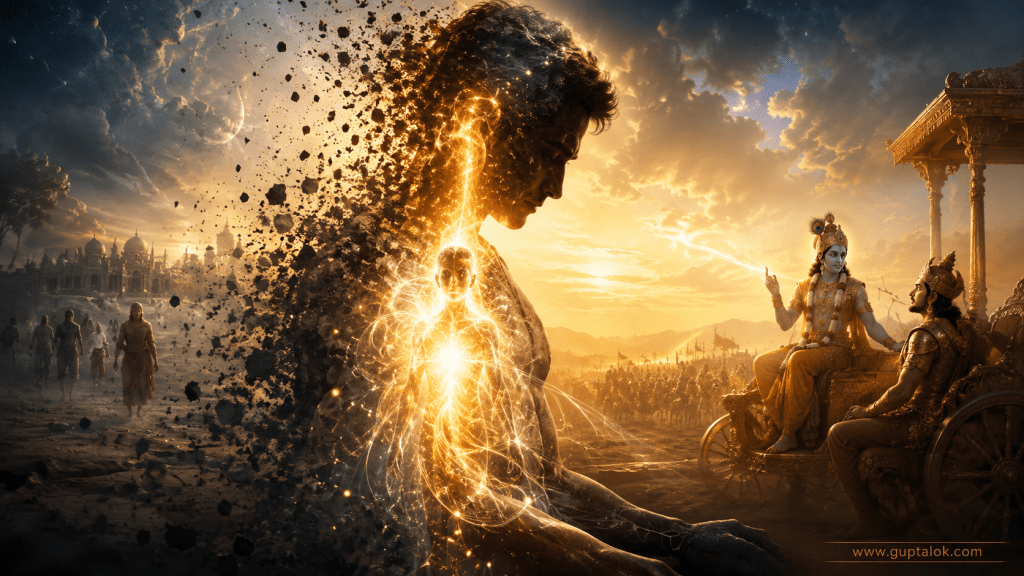
Then Sanjay tells Dhritarashtra that Shree Krishna then says these words to Arjun. What were those words? They were the wisdom of Sankhya Yoga that we, too, would learn in the following shlokas of Bhagwat Geeta Chapter 2. So, stay tuned!










Leave a Reply