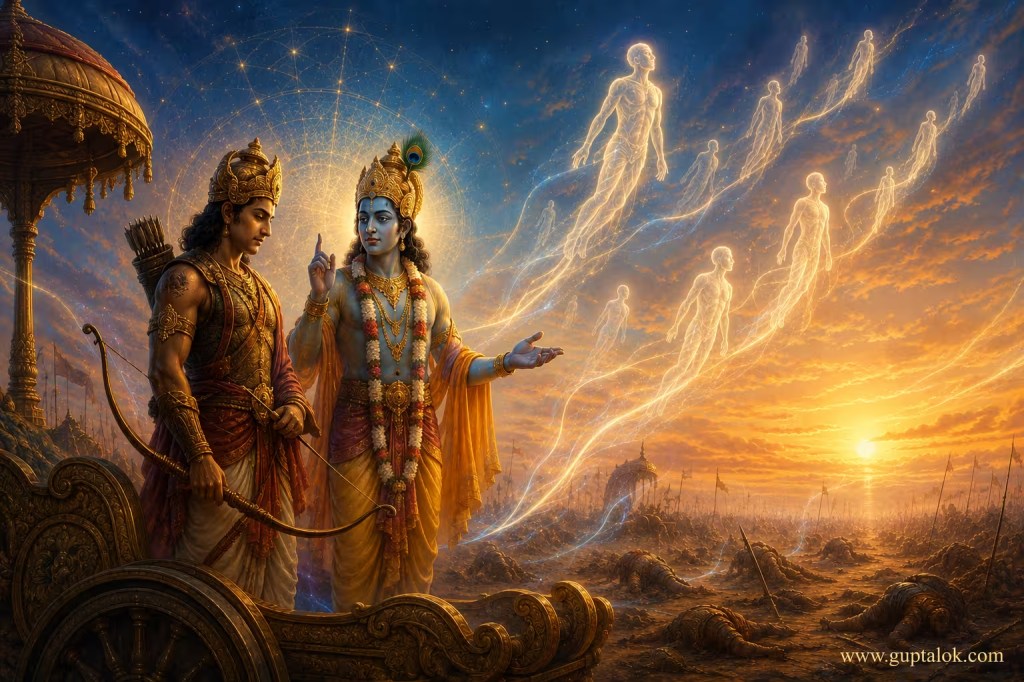
Every time you stayed silent when you should have spoken. Every time you chose comfort over conscience. Every time you convinced yourself that doing nothing was somehow safer than doing something — you stood exactly where Arjuna stood on the battlefield of Kurukshetra. Frozen. Conflicted. Overwhelmed by the noise of a hundred competing duties drowning out the one voice that mattered: the voice of Absolute Dharma. Shlok 6 of the Bhagavad Gita captures this universal human crisis with stunning precision. To dive deep in this concept, let’s start with the Sanskrit to English transliteration of Gita Shlok 6 from chapter 2:
Na Chaitdwidmah Kataranno Gareeyo
Yadwa Jayem Yadi Vaa No Jayeyuh |
Yaanev Hatvaa Na Jijeevishaam
Ste-Awasthitaah Pramukhe Dhaarta-Raashtraah ||6||
English translation:
And we don’t even know what would be better for us, whether our conquer on them or their conquer on us. And I don’t even wish to live after killing those sons [and people] of Dhritarashtra, who are standing in front of us [in this battle].
Exegesis and Central Idea:
In this verse, Arjun spoke about the confusion he had about what would be better for him. He was in a dilemma of whether winning or losing the battle would be actually good. It was because he was not sure whether he was fighting for the right or wrong. He was unable to decide on which duty he should prioritize to do the act of righteousness (absolute dharma).
Your Duty as a Human is the Absolute Dharma
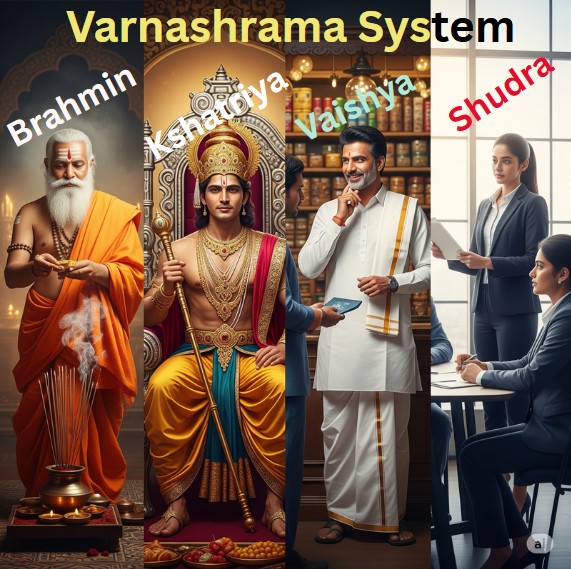
Arjuna was bound by many duties. He had duties toward his family. He had Varna-Ashrama duties, clan duties, spousal duties, and more. He treated all of these as immutable laws. Because of this rigid adherence, he was unable to see the Supreme Duty — the Param Dharma.
The same is true for human beings today. People are bound by various dharmas — duties, obligations, and responsibilities. They too have come to treat these dharmas as fixed, unchangeable truths. As a result, the majority of them remain confused and misguided about what is truly right and what is truly wrong. This happens for one core reason. They never learn the basis of all these dharmas. They never ask where these duties of man-made identities actually come from.
The answer is simple. The basis of every man-made identity’s dharma is one’s god-made identity. And our god-made — or natural — identity is simply being human. Therefore, the starting point must always be the duty of a human being. That duty is working for the welfare of all living beings — current and future generations alike. This is the foundation on which all other dharmas rest. The dharmas of religion, family, caste, country, and every other man-made identity are all rooted in this one truth.
And this is precisely the Absolute Dharma explained by the human incarnation of God, Shree Krishna. It is what is commonly known as Sanatan Dharma.
Multidimensional thinking can only lead you to perform Dharm
Arjun was unsure whether winning or losing would be better. This confusion stemmed from his unclear understanding of Absolute Dharma. He believed that winning meant killing his kinsmen. As a family member, that felt wrong. But when those kinsmen are adharmik, killing them becomes one’s duty — both as a human and as a Kshatriya. Arjun’s problem was simple: he was only seeing his duty as a family member. He was blind to his duty as a Kshatriya and as a human being. Krishna later corrected this.
Krishna explained that performing Dharm requires thinking beyond a single aspect. One must carefully consider all aspects that may be impacted by one’s action or inaction. The thinking must go deep. It must ask: what will benefit the current and future generations of humanity? Importantly, this thinking should not center on personal gain. It should not center on the benefit of loved ones or close allies either. The only question worth asking is: what benefits the universe as a whole? That answer points toward the larger goal, and one must act accordingly.
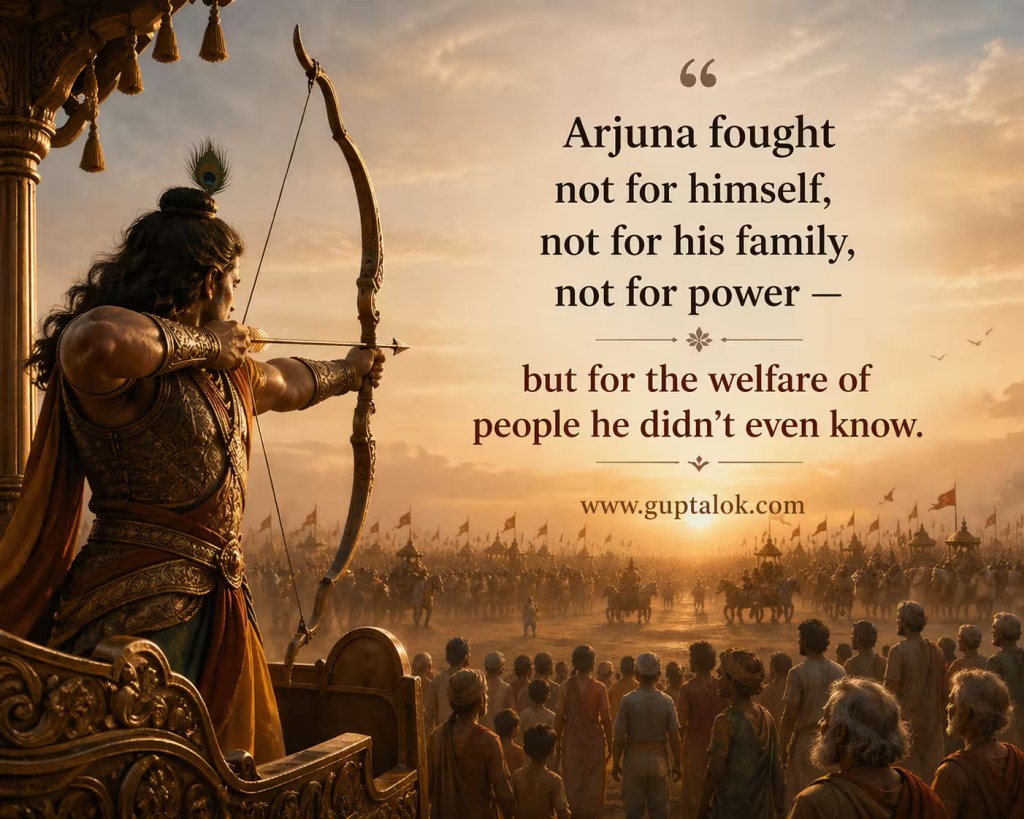
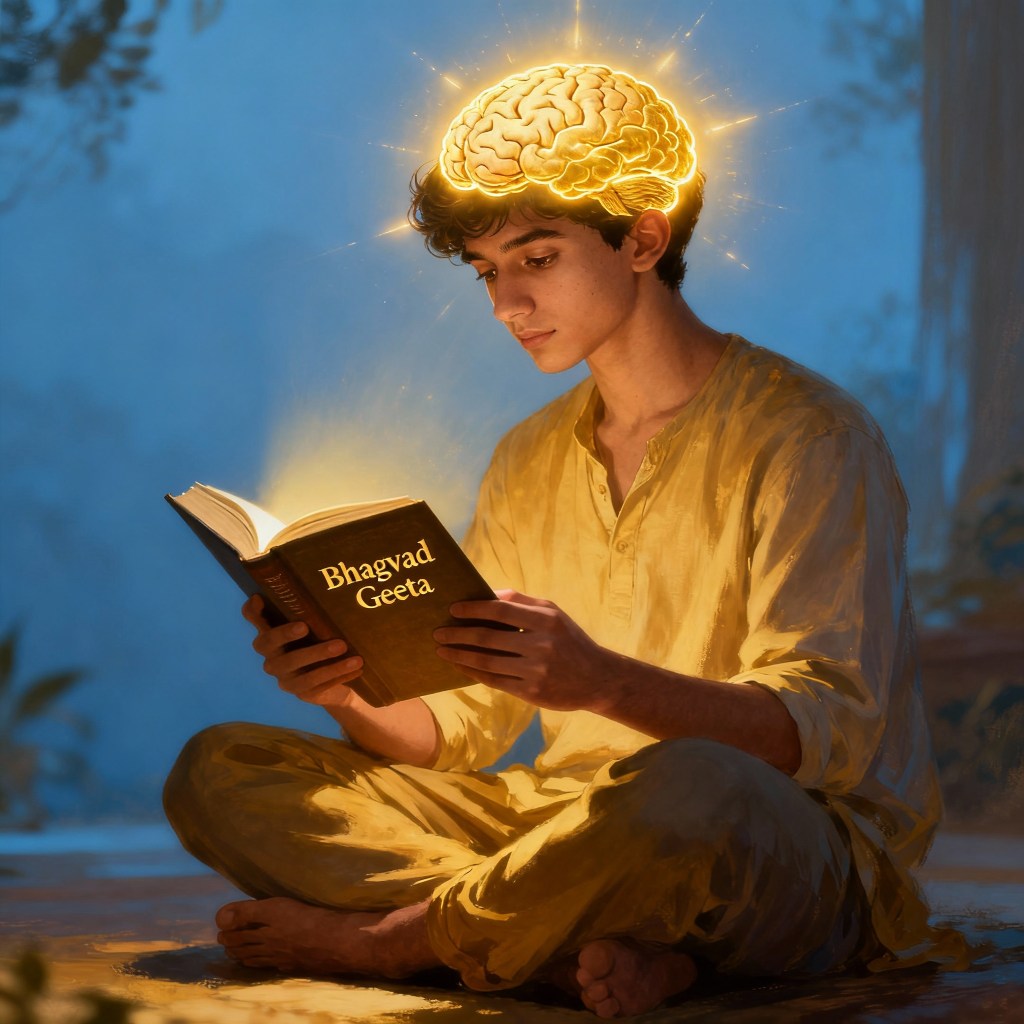
Arjuna stands firm on the battlefield, fighting not for self, but for the greater good.This is what multidimensional thinking means. While making any decision, one must not limit themselves to one, two, or even a handful of aspects. Every possible aspect that could be affected must be held in mind. The brain must not be restricted to thinking about a few living beings. It must stretch itself to think about the welfare of every living being — including those yet to be born on this earth.
This is exactly what Krishna helped Arjun understand. He told Arjun to stop thinking about his family members. Stop thinking about personal gains from the battle. Stop thinking about heaven or hell. Instead, think about one thing: what kind of ruler will the larger population get? Krishna made it clear that if Arjun refused to fight, rapists and tyrants would rule the public. If he fought, righteous leadership would prevail. It was never about Arjun or the Pandavas gaining power. It was always about the people who were going to be ruled. The Kauravas would force the public to live under the grip of Adharma. The Pandavas would let the public live in the bliss of Dharm. Had Arjun kept his thinking limited to Kauravas, Pandavas, and family, he would have acted only for the benefit of those few. But when he expanded his thinking to include the general public — people he didn’t even know — he chose to fight for the welfare of the larger human population.
Universal Welfare doesn’t include Welfare of Non-Righteous (Adharmik) People
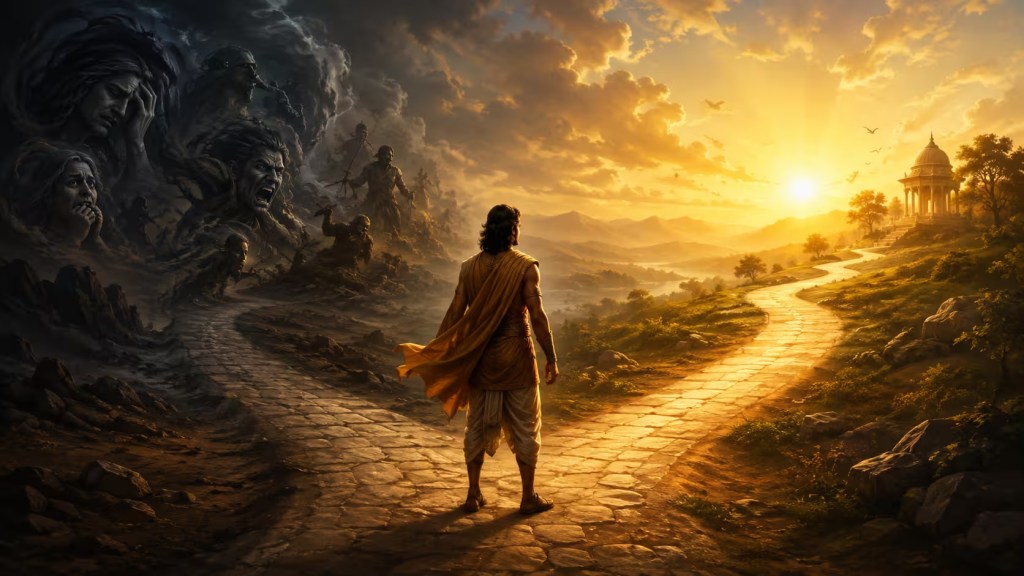
Remember, Arjun, guided by Krishna, didn’t think of the welfare of those people of the population (Kauravas and their supporters) who were rapists and tyrants, or the supporters of such Adharmik (non-righteous) people. This dimension must also be considered while working for Dharm. If one fails to correctly identify the adharmik people, he/she risks working for their welfare instead. This is exactly what Karn did. He supported the non-righteous and eventually became one of them. The moral is clear. One must look at all possible dimensions that are impacted or may be impacted by his/her actions. One must not blindly follow the commands of a few people, a thought process, a book, a religion, or hearty feelings. And throughout this process, one must stay alert. Some people may appear innocent but silently support and protect non-righteous groups. One must be careful enough to not help such people.
Heart Feelings Would Try to Stop You from Doing Dharm, Don’t Get Trapped!
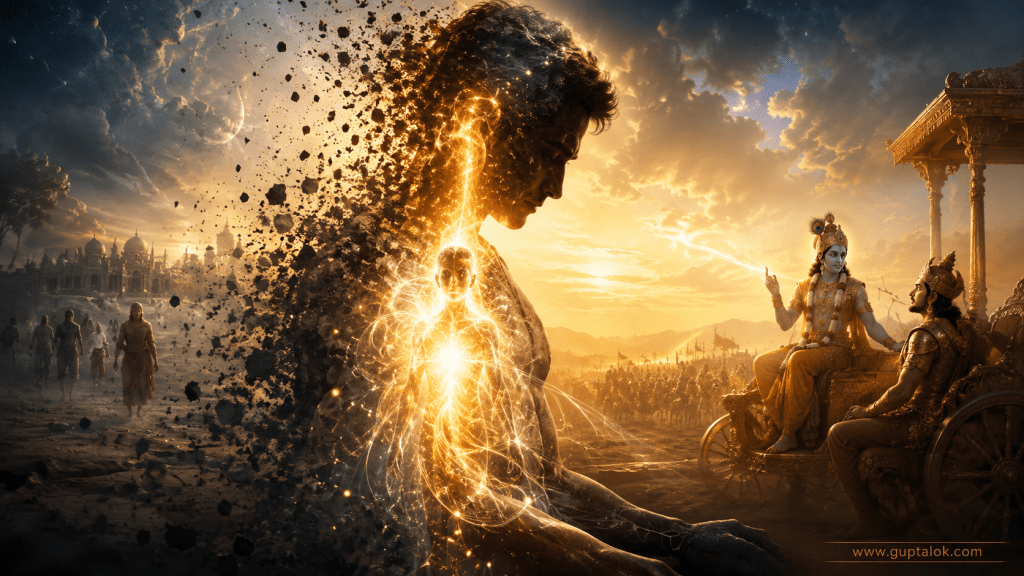
Arjun said he would not want to live even after winning the battle. His heart was filled with deep compassion for his kinsmen. He felt it was better to suffer personally than to kill those who had educated him, cherished him, and played with him in childhood. He began imagining life after the war. He pictured a world where barely anyone from his family remained alive. This recalling of the past and imagining of the future pulled him into deep depression. These are what can be called heart feelings. They are the feelings that make the heart feel unbearably heavy — as if it could stop beating. These feelings were stopping Arjun from fighting this battle of Dharm. They stop us too. At every walk of life, the same feelings hold us back from performing Dharm.
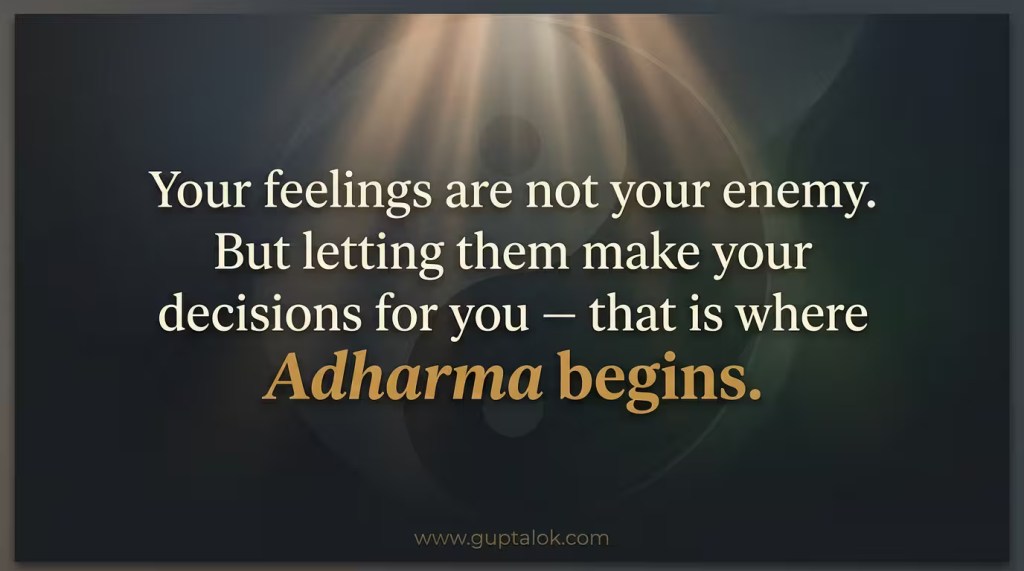
Emotions aren’t the enemy—loss of control is.It is important to note that adharmik people do not carry such feelings. That is precisely why they are so effective at destroying the righteous and the innocent. This does not mean that dharmik people should be free of such feelings. It means they must not be ruled by them. These feelings should be used as a tool — to understand when and how to act, and when and what to avoid. To free Arjun from this trap of feelings, Shree Krishna narrated the Sankhyayog, also known as Gyanyog — the absolute knowledge of human existence. We shall explore that in the following shlokas of this chapter. So, stay tuned!









Leave a Reply