Most Haridwar guides send you straight to Har Ki Pauri and back. This one starts differently — with a quiet, offbeat walk through Kankhal, past ashrams most tourists never enter, before ending at the famous ghat everyone knows. If you’re planning a Haridwar trip and want to know what a day actually looks like on the ground — train timings, walking distances, which ghats are worth a dip, and which temples are still on my list for next time — this guide has it all.
How to Reach Haridwar by Train
I travelled to Haridwar on the Mussoorie Express, which reached Haridwar Railway Station at 5:50 AM on a Saturday morning. An early train like this is genuinely one of the best ways to plan a Haridwar trip — you land just as the city is waking up, the weather is cool, and the ghats are still peaceful before the day’s crowds arrive. Haridwar Junction is well connected to Delhi, and many overnight trains from the NCR region reach here in the early morning hours, which makes a same-day or one-night trip very doable.
Walking to Kankhal: Was It Worth It?
From the station, we decided to walk towards Kankhal, roughly 3–4 km away, after hearing a lot about its beauty. Honestly, Kankhal as a whole didn’t quite live up to the hype we’d built in our heads. But a few individual spots along the way turned out to be some of the best surprises of the entire trip.
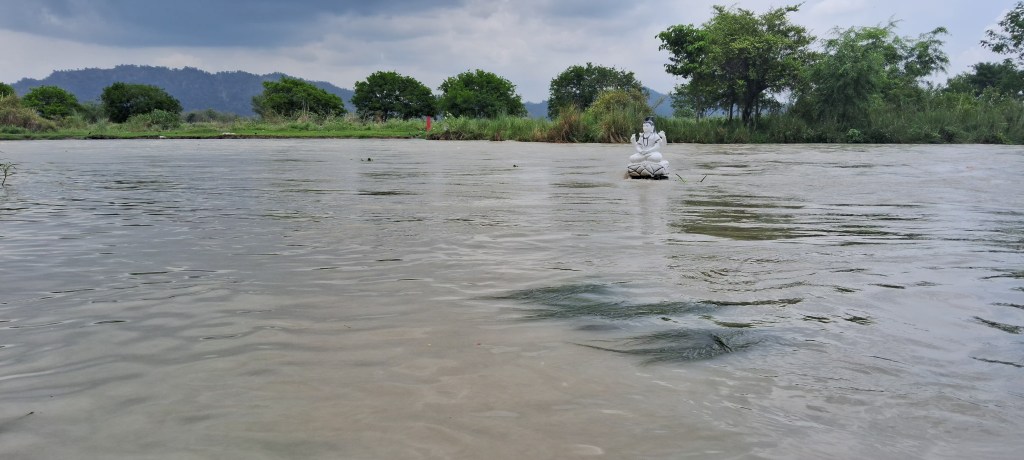
A striking statue of Mahadev sits in quiet meditation right in the flow of the Ganga at Kankhal, Haridwar — one of the many unexpected sights along the walk.The idea to walk instead of taking a rickshaw actually came from our earlier trip to Lansdowne, where walking had given us a far richer experience than we expected. That same instinct paid off here too, because walking is what let us stumble onto ashrams and ghats that no rickshaw ride would have shown us.
Daksheshwar Mahadev Temple: The First Stop
The first place we reached on this walk was Daksheshwar Mahadev Temple, and it turned out to be genuinely beautiful. We spent some time here, took in the temple’s atmosphere, and moved on. The Ganga ghat attached to this temple wasn’t very spacious, so we skipped bathing here and kept walking, looking for a quieter spot.
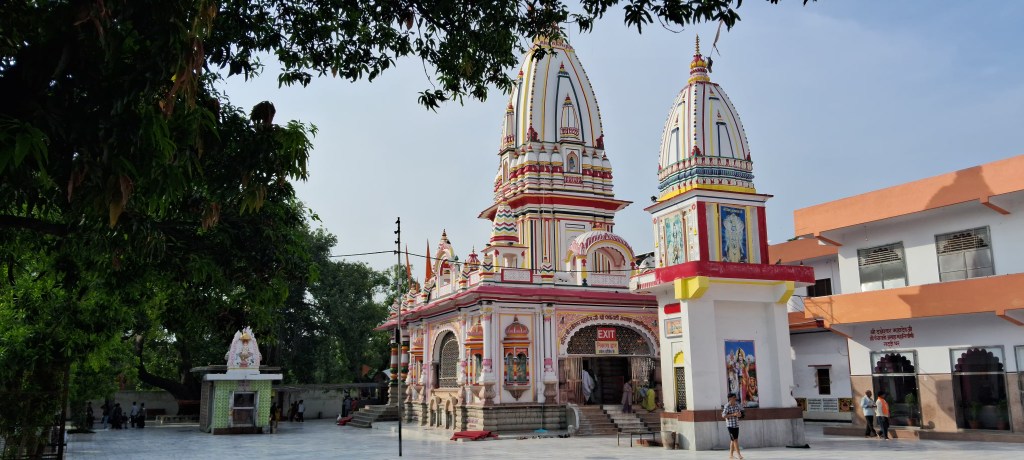
Daksheshwar Mahadev Temple in Kankhal — the first stop on the walk, with its brightly painted shikharas standing out against the morning sky.Shri Harigiri Sanyas Ashram Ghat
Next came the Shri Harigiri Sanyas Ashram Ghat — a beautiful location, but not well maintained when we arrived. We spent a little time cleaning up the ghat ourselves and sat there for a while, but decided to hold off on bathing here since we were hoping to find something a bit more scenic further along.
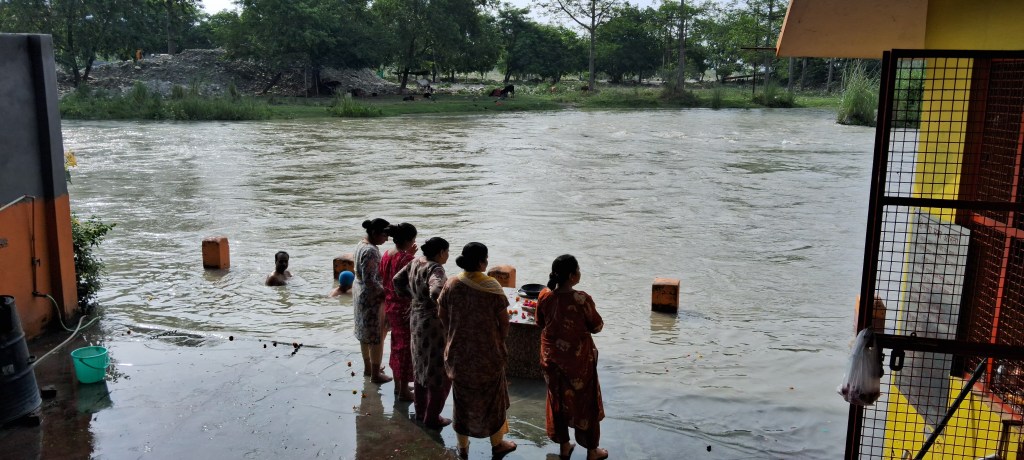
Shri Harigiri Sanyas Ashram Ghat, Kankhal — devotees gather at the water's edge as the Ganga flows past in full monsoon strengthSadhna Sadan 3 Ashram: The Best Surprise of the Trip
This is the part of the trip I’d tell every Haridwar traveller about. Sadhna Sadan 3 Ashram wasn’t crowded at all, and we walked in mostly out of curiosity. Inside, we met a lone hermit who, after a moment’s hesitation, confirmed there was a ghat inside and told us we could bathe and do darshan, but should leave within 20–30 minutes.
What followed was worth every minute of that limit. He guided us through a well-kept garden to a ghat that was clean, wide, open, and completely peaceful — just the two of us, my wife and me, with no one else around. A Shiva temple stood right at the ghat, adding to the calm.
We sat there for a while simply watching the Ganga. Knowing our time was limited, we decided to bathe quickly, but the current was too strong to get in directly, so we used a vessel to pour water over ourselves instead. The water was cold, and the sun was sharp, but the setting made it one of the most memorable snans of the trip.
As we walked toward the temple on the same ghat, we watched a snake sunbathing on the ghat steps — sliding into the water, playing around, and climbing back out. It was oddly calming to watch, and this time we felt far less afraid than we normally would, though we kept our distance. Inside the temple, we found a powerful Shivling idol and offered our prayers. Stepping out, we spotted a duck-like bird floating happily on the river, seemingly enjoying its own little ride.
With our allotted time nearly up, we walked back to the ashram gate, thanked the sage sitting near the exit, and continued on our way.
Pilot Baba Ashram: Statues, Stories, and a ₹5 Ticket
Just a few metres ahead was Pilot Baba Ashram, home to a massive 30–40 foot Shiva statue and an impressive collection of tableaux depicting figures from Hindu scriptures. There were detailed statue series showing scenes from the Mahabharata war and from the life of Rani Lakshmibai, alongside temples dedicated to Dattatreya, Shri Ram, and the Raj Rajeshwari Mata — which, to me, felt like the highlight of the ashram.
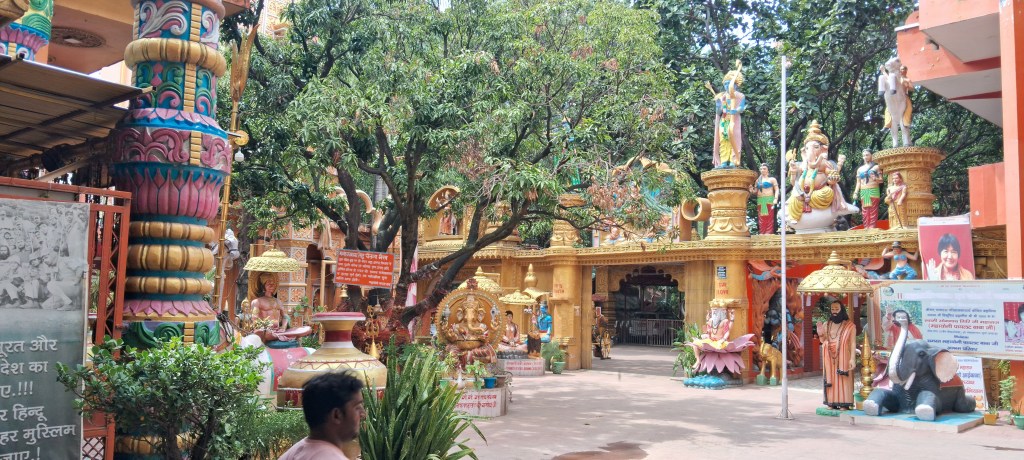
Pilot Baba Ashram, Haridwar — vividly painted pillars and statues of gods and sages line the path leading up to the main gateWe also came across statues of ancient sages and depictions of Krishna Leela and Shiv Leela, including scenes like Vishpaan and the Kachchhapavatar (tortoise incarnation). The whole ashram had a striking, energising atmosphere. Entry costs just ₹5 per person, and it’s worth every rupee for what you get to see.
A Rest Under the Banyan Tree
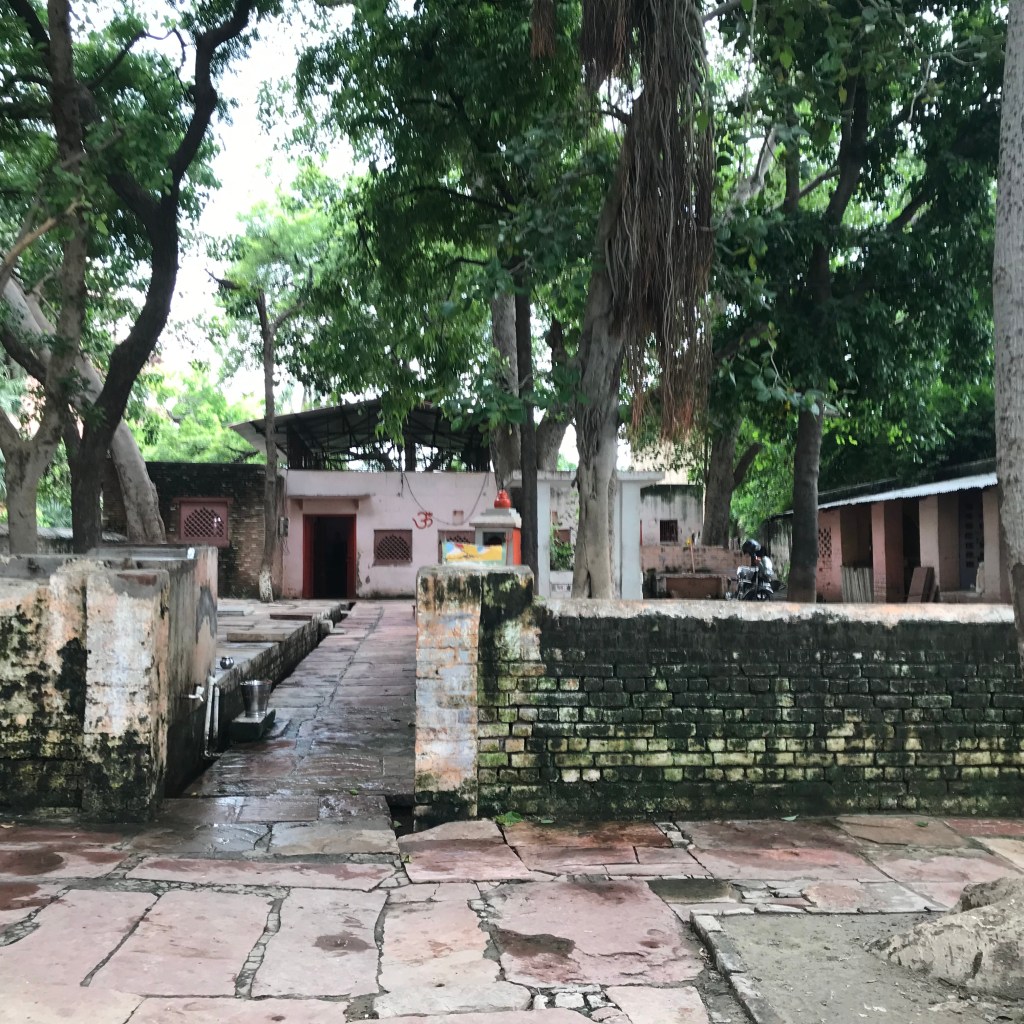
On our way back, we passed Shri Harigiri Sanyas Ashram again and found a large banyan tree with a platform built around it just outside. We rested there for close to an hour — by this point, the sun was strong and we needed the break. Once the heat became too much to keep walking, we hired a rickshaw to take us to Har Ki Pauri.
Evening at Har Ki Pauri
Har Ki Pauri was, unsurprisingly, packed with devotees. We spent a couple of hours here simply relaxing as the sun began to set, and finally took a dip in the Ganga as evening approached — something we hadn’t managed to do earlier in the day. Because of rain in the upper regions, the water was muddy, but the dip was deeply relaxing and left us feeling like all our tiredness had melted away.
We stayed on afterward, just sitting by the river. The beauty of the Ganga and the atmosphere around Har Ki Pauri become especially pleasant once evening sets in — this is genuinely one of the best times to be there.
Vishnoi Dugdh Bhandar: A Sweet Ending
Around 9 PM, we started walking back toward the railway station. On the way, close to the Marwadi Panchayat Akhada and barely 200 metres from the station, we spotted Vishnoi Dugdh Bhandar, a shop serving hot, cooked milk. The rich colour of the milk caught my eye immediately, and I ordered a kulhad for ₹40 — my wife isn’t a fan of “healthy” drinks, so it was just for me. It was absolutely worth it, and it’s now on my must-repeat list for the next Haridwar trip.
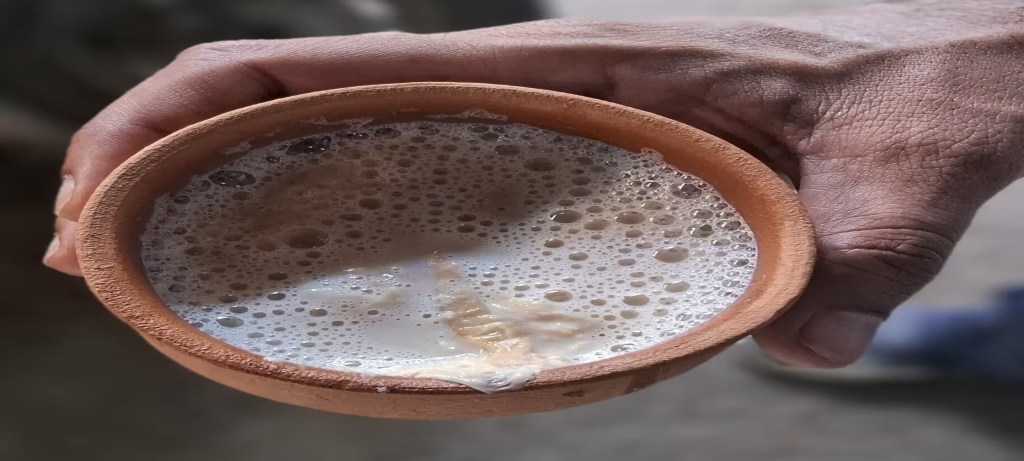
Kulhad milk from Vishnoi Dugdh Bhandar, Haridwar — hot, frothy, and the perfect way to end the day before catching the train backAfter that, we headed to the station and boarded our train back to Delhi.
Places We Missed: Mansa Devi and Chandi Devi Temples
We didn’t get to visit these two temples on this trip, but they’re essential additions to any Haridwar itinerary, so here’s what to know before you go.
Mansa Devi Temple
Mansa Devi Temple sits atop Bilwa Parvat in the Shivalik hills and is dedicated to Goddess Mansa Devi, believed to be a form of Shakti that emerged from sage Kashyap’s mind. It’s one of Haridwar’s Panch Tirth (five pilgrimages) and one of three Siddh Peethas in the city, alongside Chandi Devi and Maya Devi temples. Devotees tie threads to a sacred tree inside as a wish-fulfilling ritual, and return to untie the thread once the wish is granted. You can either trek roughly 1.5–3 km uphill or take the Mansa Devi Udan Khatola ropeway, a short 5–10 minute ride with sweeping views of the Ganga and the city below. The temple base is only about 2–3 km from Har Ki Pauri, so it pairs easily with a Har Ki Pauri visit.
Chandi Devi Temple
Chandi Devi Temple stands on Neel Parvat, on the opposite side of the river, about 4 km from Har Ki Pauri. According to legend, the temple marks the spot where Goddess Chandi rested after defeating the demon kings Shumbha and Nishumbha, and the main idol is said to have been installed in the 8th century by Adi Shankaracharya, though the present structure was built in 1929 by Suchat Singh, the King of Kashmir. Like Mansa Devi, it can be reached by a 3 km uphill trek or via the Chandi Devi Udankhatola ropeway, which takes around 5–10 minutes and also offers combo tickets covering both temples.
Both temples are best visited between October and March, or early morning if you’re going in summer, since the trek routes get punishing in the afternoon heat.
Final Thoughts
A Haridwar trip doesn’t have to mean rushing straight to Har Ki Pauri and back. Walking through Kankhal opened up quiet ashrams, unexpected ghats, and small moments — a snake enjoying the sun, a bird floating happily downstream — that felt more memorable than any tourist checklist item. Next time, Mansa Devi, Chandi Devi, and of course another kulhad of milk from Vishnoi Dugdh Bhandar are already on the plan.
Frequently Asked Questions About a Haridwar Trip
Is Kankhal worth visiting in Haridwar?
Kankhal as a whole is a mixed bag — some parts don’t match the hype, but hidden spots like Sadhna Sadan 3 Ashram’s ghat and Daksheshwar Mahadev Temple make the walk worthwhile if you have the time and don’t mind exploring on foot.
Can you walk from Haridwar Railway Station to Kankhal?
Yes, it’s roughly a 3–4 km walk and is very doable early in the morning before the heat picks up. It also lets you discover smaller ashrams and ghats along the way that you’d otherwise miss.
Which ghat is best for bathing in Haridwar besides Har Ki Pauri?
The ghat inside Sadhna Sadan 3 Ashram is a hidden gem — clean, quiet, and far less crowded than Har Ki Pauri, though access may depend on whoever is present at the ashram when you visit.
What is the entry fee for Pilot Baba Ashram in Haridwar?
Around ₹5 per person, which is minimal considering the scale of the statues and shrines inside.
What is the best time to bathe at Har Ki Pauri?
Evening, close to sunset, tends to be calmer and more scenic, though it’s also when the Ganga Aarti crowd builds up. Mornings are quieter for a bath but can be more rushed.
Are Mansa Devi and Chandi Devi temples walkable from Har Ki Pauri?
Mansa Devi’s base is about 2–3 km away and Chandi Devi’s is about 4 km away. Both have ropeway options if you’d rather skip the uphill trek, especially in hot weather.





Leave a Reply