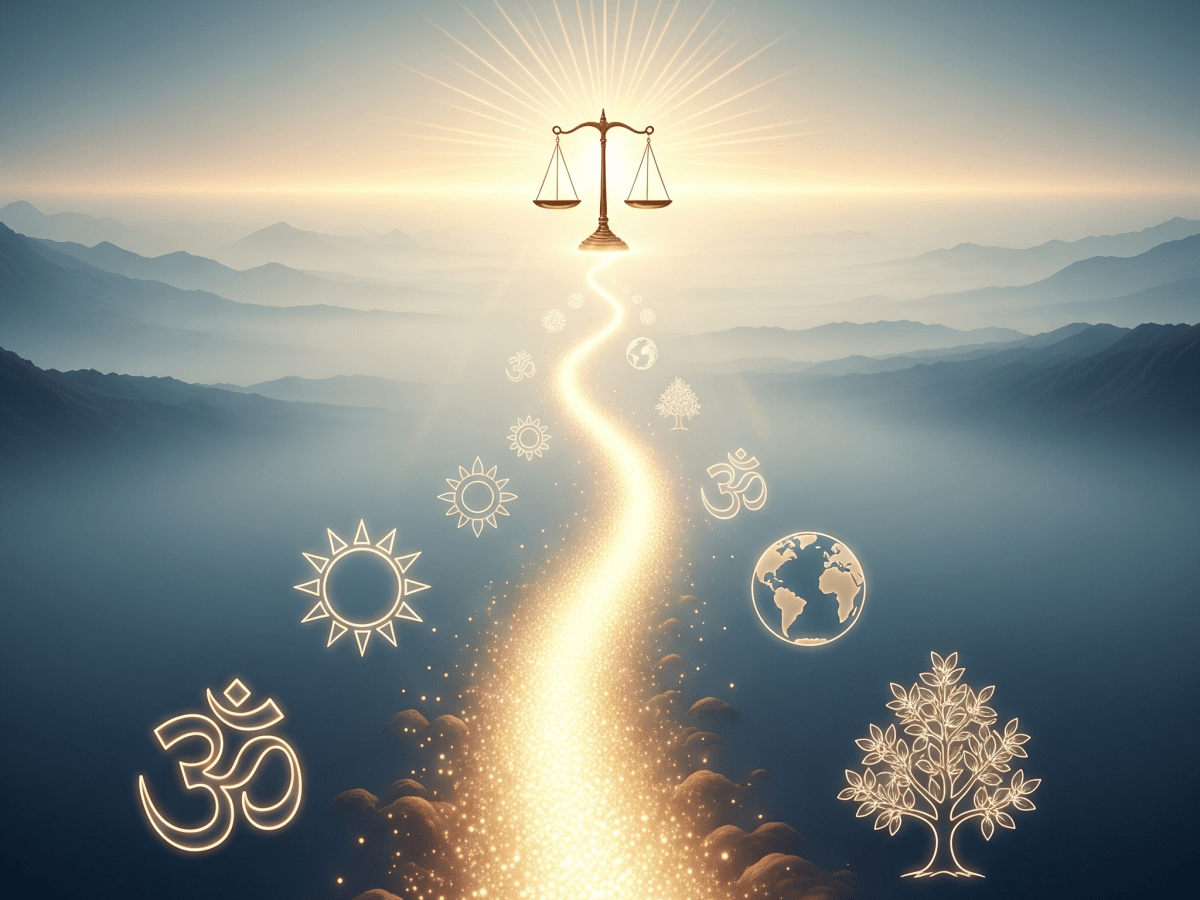
Dharm is one of the most misunderstood concepts in the modern world. Often equated with religion, sect, or tradition, its true meaning goes far beyond rules, rituals, and beliefs. Dharm means righteousness — the absolute right. It is the essence of truth, morality, justice, and the universal good.
Dharm is Not Religion or Majhab
One of the most important clarifications we must make is this:
- Dharm is not religion.
- Dharm is not majhab.
Religion is often associated with a set of prescribed rules, beliefs, or community-based rituals. Dharm, on the other hand, has nothing to do with religious leaders or clerics, religious structure, or external practices. Dharm is not a rulebook but a living principle — something that must be realized through wisdom, truthfulness, and conscience.
Dharm, God, and Universal Truth Are One
God, as commonly understood, is often portrayed with a name or form, but true God is not merely a name or figure — God is an institution that exists only with Dharm. If anything or anyone, claimed to be God, ever asks you to do something that goes against righteousness, then it is proof in itself that it is not God.
Where there is no Dharm, there can be no God.
- Shri Krishna is God but anyone with the name Krishna is not God. The proof of Shri Krishna being God is his preaching of Dharm in BhagwadGeeta.
- The proof of Shri Ram being God is his righteousness and respectful approach towards every being but anyone with name Ram is not God.
- The proof of Mahadev being God is his nature to remain in Dhyan (meditation) which is the best way to understand Dharm and God. However, anyone with the name Mahadev or Shiv is not god.
The point is that we should not believe on any name of God unless it is associated with righteousness because God is not just the name.
Similarly, Universal Truth — the eternal reality — is Dharm.
Conclusively, God, Dharm, and Truth are not separate. They are three expressions of the same ultimate principle.
How to Perform Dharm in Real Life?
Performing Dharm is not about following quotes or rules blindly. Instead, it demands inner honesty, situational awareness, and deep wisdom. To truly follow Dharm:
- You must analyze the situation with neutrality.
- Speak to your inner self with honesty, not with bias or ego.
- You must eliminate selfishness, personal benefit, emotional attachment, or prejudice toward any person or outcome.
- Do not act out of fear, greed, loyalty to relations, or blind obedience to written words.
Only when you make decisions with pure intent, fairness, and selflessness, you are performing Dharm.
Why Wisdom is Greater than Rulebooks
No fixed set of rules can define what is always right in every situation. Life is complex, and Dharm requires contextual understanding. What might be right in one circumstance could be wrong in another.
Thus, Dharm cannot be codified — it must be realized. You must pause, think deeply, be truthful, and then act. This is how real righteousness works.
Dharm Is the Foundation of Truth and Divinity
In a world full of divisions based on religion, caste, politics, and belief systems, we must return to Dharm — the path of righteousness. It is not something you belong to. It is something you live by.
If your actions, your beliefs, or names whom you think are Gods are disconnected from righteousness, then they are disconnected from truth itself.
Let Dharm be your compass, not religion, not rulebooks, not traditions. Seek the truth honestly — that is where real God lives.
There is a lot to share about Dharm and the Pages listed below might help illuminate Dharm within you.
- Caste System vs Varnashram: The Truth Behind Identity and Dharm
- Relation between Hindus and the Dharm.
- Understanding the Roots of Hatred – Q&A
- What are Dharm Granth?
- What is Adharm or Sin?
- What is Bhagvad Geeta? How to Learn its Real Meaning?
- What Takes You Off the Path of Dharm (Righteousness)
You can also explore our articles on Dharm and other related topics.





 Gupt Alok
Leave a comment