
Dharm, which doesn’t mean religion or majhab, is the path of truth, balance, and inner purity. Being Dharmik means to have a righteous approach towards everything and everyone in life. If you are Dharmik, you’ll practice absolute righteousness in all the cases and situations. If you want to be Dharmik, which you must, you’ll have to fight with the army of impurities (Vikar). These vikars are the human’s biggest enemies on their path of righteousness. Their job is to pull you away from the path of Dharm and push you on the path of Adharm (Sin). Let’s talk about a few major vikars (impurities) that are stopping humans from having Dharm (Righteousness and Goodness) within them.
1. Ego (Ahankar)
Ego is a false sense of self that constantly seeks superiority, validation, and control. On the other hand, Righteousness (Dharm) is rooted in truth, humility, balance, and the greater good. When ego dominates a person’s mind, it creates a wall between them and the path of righteousness. Ego constantly wants you to believe that you are most superior and you must control everything and everyone. It never lets you think rationally but forces you to behave arrogantly, dominantly, and idiotically. It makes you so hungry of dominance and arrogance that it forces you to do unrighteous acts and even accept the slavery of anyone who persuades you to do something in return of awarding these two. These persuaders could be religious leaders, political leaders, local leaders, caste leaders, and even the experienced slaves.
This Ego is so bad that it doesn’t let you satisfy even after being arrogant and dominant on some, it wants you to dominate more and do more unrighteous things. This circle continues to grow and you die a day without achieving anything concrete but tons of unrighteous acts, and the slavery of ego and many others. Below are a few widely seen negative impacts explaining what the ego does to a person.
• Blocks Growth and Self-Reflection
A righteous person remains humble and always open to learning. Ego, on the other hand, convinces you that you already know enough. Thus it makes you blind to your flaws and closed to advice or correction. And remember, there can be no real inner progress without self-reflection.
• Destroys Relationships and Compassion
Dharm (Righteousness) teaches compassion, forgiveness, and selflessness. Ego does the opposite — it makes you proud, defensive, and unwilling to admit mistakes. This damages relationships and distances you from acts of love, duty, and service.
• Creates a False Identity
Ego thrives on labels, status, and appearances. It makes you act to impress others, not out of sincerity or truth. Dharm (Righteousness), however, requires living from your true nature, not from a mask created by society or self-importance.
• Feeds Conflict and Division
A person trapped in ego often feels attacked, competes unnecessarily, and argues to prove superiority. Righteousness (Dharm) promotes harmony and understanding, which ego actively disrupts.
• Brings Restlessness and Suffering
The ego is never satisfied. It always wants more — more praise, more power, more success. This endless chase moves you away from the peace and contentment that come naturally when living a righteous, grounded life.
• Blocks Spiritual Growth
Righteousness (Dharm) is the path to higher truth and liberation. Ego, by clinging to “I” and “mine,” becomes the biggest obstacle on this path. True Dharm can only begin where ego ends.
In essence, ego leads you away from your higher self, while righteousness (Dharm) brings you closer to it. Letting go of ego is not a loss — it is freedom, truth, and alignment with your real purpose.
2. Lobh (Greed)
Greed is the never-ending hunger for more — more wealth, more power, more pleasure. Dharm teaches contentment and ethical living. Greed ignores both and makes the person chase desires without limits.
There is a very thin line between need and greed, and the moment you cross that line, you deviate from the path of Dharm (Righteousness). Need is something that makes you aware of the things for survival, while greed is something that forces you to create false needs. As soon as you start creating artificial needs through the impact of external factors, you start overlooking the ethics. You also start to have a great mountain of needs, which actually are not needed for survival, but are a catalyst to exploit nature, animals, and other humans. These false needs ensure that your hunger or thirst is never satisfied, and they keep you stuck in the trap of making money and storing it. You don’t only store money, but also other things that could be useful for other living beings. Slowly and gradually, they start attaining ego, fear, and jealousy, never having time to introspect and understand the real truth – the Dharm. In short, here are a few things that people attain from greed which leads them away from Dharm (Righteousness).
- Greedy people lie and cheat others to gain more and more. You must know that lying and cheating for personal gain is Adharm (Non-righteous).
- Greed destroys balance in people; they start doing bad deeds to increase their gains. And Bad deed means Adharm (Non-righteousness).
- Greed always keeps people dissatisfied, leading to having more by hook or crook which is again Adharm (Non-righteous).
- Greed makes you selfish and therefore you don’t care while harming other innocent lives.
- You get trapped in wanting more and thus never introspect to know the truth.
3. Moh (Attachment)
Moh (Attachment) is the emotional grip we form with people, objects, or ideas. It is the polluted version of love and care. While love and care are natural, excessive attachment clouds the mind and leads us to ignore what’s right. Dharm teaches to love and care but also to stay detached from people, identities, and things. It teaches not to be excessively attached with them just because they are connected with you by one or another means. Because if you do so, you also do unrighteous acts with others for the sake of those with whom you are attached. Your Moh (excessive attachment) also makes you support your unrighteous relatives and identity-sharers even if they do most unrighteous acts like raping, torturing, or mass killings. And this is how you get away from the path of Dharm (Righteousness). Here are a few things you attain due to Moh (attachment) that lead you to Adharm (Non-righteousness).
- It makes your mind partial, and you start making biased decisions without thinking about what is right and what is not.
- You keep the things in your mind for long, and thus keep thinking about it forever, stopping your mind from thinking of positivity. Moh (Attachment) makes it hard for you to let go of things and situations.
- You make the decisions emotionally and thus lose the clarity of thought. Thus, your focus gets shifted from righteousness to unrighteousness.
- You get trapped in material bonds and fear of losing them, and thus ignore your consciousness.
- You suffer mentally when the Moh (attachment) is broken, getting yourself more into what is not right.
4. Krodh (Anger)
Anger is a fire that burns within and harms everything it touches. A person in anger loses control over speech and actions, often hurting others and later regretting it. Dharm requires patience, forgiveness, and calm judgment. These are the qualities that disappear when anger takes over. Anger makes you harm those you are angry with, without giving a thought to whether that person was right or not. Here are a few things that happen when you are controlled by anger.
- Anger blinds judgment, making right decisions impossible.
- Anger destroys relationships through harsh words and actions.
- Anger leads to violence, revenge, and hate — all forms of Adharm (non-righteousness).
- Anger pushes peace away, replacing it with restlessness and regret.
- Anger stops spiritual growth, as the mind becomes disturbed and unsteady.
- Anger makes you a slave of those who give you a hope of winning against the one you are angry with.
5. Bhay (Fear)
Fear makes a person weak in decision-making. Whether it’s fear of failure, loss, or others’ opinions, it pushes people to choose the easier wrong over the harder right. Dharm requires courage, clarity, and trust in truth. When you are fearful, you behave like a slave, doing everything that is needed to get out of that situation, even if it is not the right thing to do. Here are a few things that fear does to you, snatching you away from Dharm (Righteousness).
- Fear stops you from doing the right thing, even when you know it.
- Fear forces you to create lies because you fear telling the truth.
- Fear of loss or defeat leads to inaction, neglecting duty and responsibility.
- Fear disconnects you from your power, making you doubt yourself. You start thinking that you are not strong enough to stand for right. Thus, you let the wrong dominate the people, societies, and the world.
- Fear blocks inner growth, as it controls your mind. It doesn’t let you think out of the box to make the right win but forces you to behave like a useless body.
6. Irshya (Jealousy)
Jealousy arises when one feels bitter about others’ success or happiness. Instead of focusing on personal growth, a jealous person compares and competes. Dharm asks us to celebrate others’ progress and grow through self-effort. On the other hand, jealousy makes you do the wrong things against those whom you are jealous of, harming their growth and life, which is unrighteous. You not only do wrong with them but also take the wrong ways to look and feel better than them, losing out on the real success you could achieve. Here are a few things that happen when you let jealousy lead you.
- Jealousy breeds negativity, criticism, and gossip. And you do this all without thinking of whether you are doing right or not. Your focus remains only to prove others’ success and bliss fake, and you speak and do everything wrong to succeed in this attempt of yours.
- Jealousy breaks relationships, as jealousy leads to mistrust.
- Jealousy blocks gratitude, keeping the mind unthankful and unhappy.
- Jealousy encourages harmful acts, like pulling others down, which is again an unrighteous thing.
- Jealousy eats inner peace, making contentment impossible, which leads to following wrong practices in an attempt to have more.
7. Aalasya (Laziness or Neglect)
Laziness is the quiet killer of duty. It makes a person delay or avoid what is right, often hiding behind excuses. Righteousness needs action, effort, and awareness — all of which laziness destroys. Laziness stops you from working for your survival which is harmful for yourself and your family. However, it is more harmful when it stops you from doing the right thing. For example: Someone teases a woman, tortures her, or does anything that should not be done to her, and you think, “Why should I intervene? Let’s enjoy life. I am not responsible for it.” Let’s understand a bit more on what Laziness does to you.
- It leads to missed duties, weakening one’s character. As soon as your character is weakened, you start deviating from the path of righteousness. The aforementioned example belongs to this point.
- Laziness blocks discipline, which is the backbone of Dharm. Discipline is doing the right thing at the right time and right place, which, if not done, leads you to unrighteousness.
- Laziness encourages short-cuts, which often lead to wrong paths.
- Laziness feeds ignorance, as lazy minds avoid learning. And those who avoid learning, they are often taught unrighteousness by unrighteous people and forces for their expansion and benefits.
- Laziness slows spiritual progress, keeping the soul stuck in the material things which ultimately leads to unrighteousness.
8. Kusang (Bad Company)
The company we keep shapes our thoughts and actions. When surrounded by people who live in falsehood, negativity, or materialism, it becomes harder to stay on the path of Dharm. Good company uplifts, but bad company corrupts. In today’s time, when it is difficult to find a good company, focus on introspection, which is going to be the best company to make you a great and righteous human being. Let’s have a look at how bad company drifts you away from the path of righteousness.
- Bad company normalizes wrong actions, making Adharm (unrighteousness) seem acceptable.
- Bad company pollutes the mind, with negative talk and habits.
- Bad company weakens righteous values which are the core of Dharm.
- Bad company distracts you from inner positive goals, with constant negative outer noise. It makes you feel that the negativity is the right thing.
- Bad company takes away good energy, leaving confusion and conflict, leading you to the trap of unrighteousness.
9. Disconnection from Inner Self (Atma-Vimukhata)
When a person forgets their inner voice, they become lost in the outside world. They start chasing fame, pleasure, and opinions which are actually maya (illusion). Dharm begins with self-awareness. You should know what is right in your heart and act with honesty. Without connection to the inner self, decisions become shallow and easily influenced. It means you don’t actually listen to your inner self but make decisions based on the thoughts of others when you are disconnected with your inner self. Let’s have a look at the impacts of disconnection from inner self.
- It makes the person outward-focused, ignoring the voice of conscience.It
- creates confusion, as one blindly follows trends or people.
- It leads to regret, because actions are not aligned with truth.
- It weakens moral strength, as there’s no inner anchor.
- It prevents spiritual growth, as the soul remains ignored and unheard.
10. Arrogance of Knowledge or Power
When someone becomes proud of their knowledge, position, or power, they often stop walking the path of humility and righteousness. True Dharm is not about showing off what you know or controlling others. It’s about using what you have to serve the truth and uplift others. Arrogance twists this purpose. Also, the moment you attain arrogance, you lose all the knowledge you think you have because knowledge does not produce arrogance, but illusion of knowledge does. Let’s have a look at how this arrogance leads us to unrighteousness.
- It blocks humility, making the person feel superior to others.
- It leads to misuse of knowledge-illusion or power, often harming those weaker.
- It prevents learning, because the arrogant believe they know it all.
- It breeds disrespect, especially toward elders, teachers, or the divine.
- It disconnects actions from values, turning service into self-glory.
11. Religions and other Identities
Many people may think that religion is the way to reach God. However, the truth is that the religious bodies condition you that way just to keep you under the control of themselves and religious clerics. Religious leaders and clerics make you blind mentally by telling you that your religious identity would lead you to God, or heaven, or something else luring. And after that, they start teaching you to just focus on a few rules to stay under that particular identity. In those teachings, their main focus remains to do everything for those who hold the same religious identity as yours. They also train you to blindly follow what they or the rulebooks made by them want you to do, without asking the opinion of your own inner conscience. Slowly and gradually, they make you a brainless person who does every in-human or Adharmik or sinful acts in the name of religion and God.
On the other hand, if you refuse to get into the slavery of a religious identity and just focus on Dharm (righteousness) and God, you can easily establish a connection with God. You actually don’t need any labels, which would be checked by God before providing you a wonderful afterlife, if there is any. God just wants you to act according to Dharm (Righteousness), which you can learn from your conscience. If you do so, you are sure to have a great afterlife, if there is any such thing.
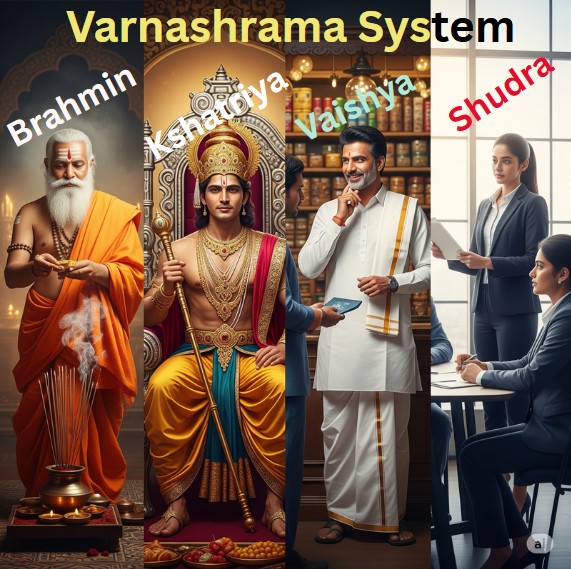
It is not only the religious identity that makes you a slave and forces you to do all unrighteousness, but all other identities that you think make you better than others make you a slave – a brainless slave. And remember, once you have become a slave, you cannot do good to others as well as yourself. You just think that you are the king, but you don’t get peace from within. You always remain disturbed; You sometimes exploit others and sometimes you feel exploited. And all this happens just because you remain under the possession of one or the other identity that forces you to do everything that is not needed at all. Let’s have a look at how these identities make you a slave who has been enslaved with the use of fear, entitlement, greed, or some other such thing.
- These identities give you a false feeling that you are better than others and that’s why you exploit others.
- They sometimes give a feeling that you were exploited in the past by some other identity, and now it’s your turn.
- Religious identities give you a false feeling that you are God’s man, and therefore, everything and everyone in the universe is your property. You can do whatever you want to do with them.
- These identities make you a slave of one or the other rulebook, stopping you from using your conscience and intelligence to make a righteous decision. You become bound to take biased decisions and actions.
- These identities instill you with a feeling that the person who holds the same identity as yours can’t be wrong, but the other party can only be wrong. You put irrational arguments to support those who have committed heinous crimes but hold the same identity as yours.
- These identities eliminate your real identity which is Human.
- These identities make you and me different from each other, even if we both want the welfare of humans and other living beings. And then we stop wanting universal welfare because our identities stop us from agreeing on one point.
- Religious identities force you to limit God from cosmopolitan to just a name or a form. You think that God is just a physical thing, but not the source of righteousness.
- Religious identities stop you from learning about God and righteousness by studying the books of different cultures. It limits your thought process by stopping you from even learning about different thought processes.
In Summary:
Each of these vikars including anger, greed, jealousy, or laziness are inner enemies that weaken our connection to truth, duty, and peace. To walk on the path of Dharm, we must first become aware of them, and then work daily to overcome them with patience, effort, and self-discipline.














 Gupt Alok
Leave a comment