Varanasi is one of the oldest inhabited cities, witnessing the ancient culture, traditions, and an inclusive way of worship. It is on the banks of the Ganga River where worshippers bow to the sun, river, Shiva, and other forms of God.
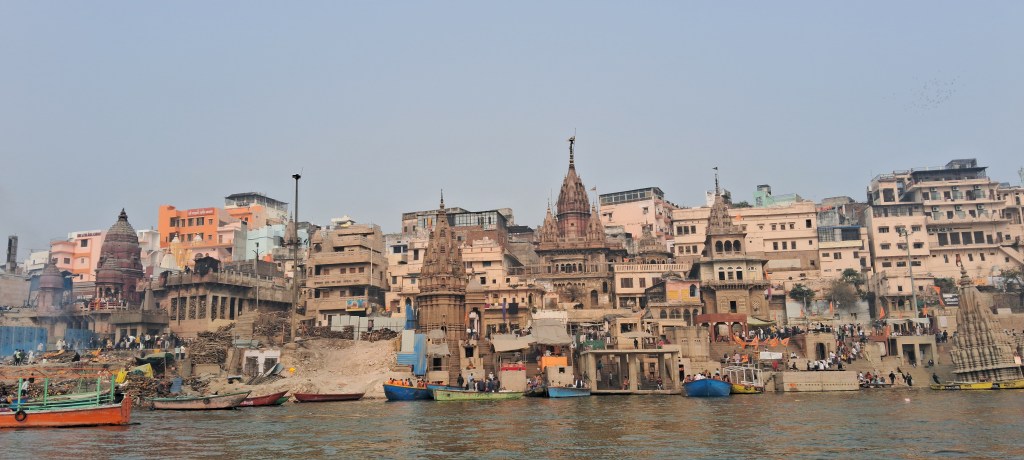
A View of Manikarnika Ghat from Ganga JiIt is a pilgrimage site, offering a close view of life and death, affection with nature, and devotion to Mahadev. I got a chance to visit this sacred city in January 2026 and got myself blessed and blissed.
Trip to Varanasi (Banaras): How to Reach
Varanasi is well-connected to major Indian cities like Delhi, Mumbai, etc., by airways, railway, national highways, and expressways.
Reaching Varanasi (Banaras) Via Flight
It has its own airport, Lal Bahadur Shastri International Airport (VNS), which has direct flights from major cities and connecting options from nearly all cities. It is 24-26 km from the city centre and the Kashi Vishwanath Temple.
Reaching Varanasi (Banaras) Via Train
Banaras has many railway stations that connect the city to different parts of the country by railway. Varanasi Junction (BSB) and Banaras (BSBS) railway stations are the main train stations, welcoming passengers coming from most long-distance destinations. The BSBS station is formally known as Manduadih. The distance from the city centre and the Kashi Vishwanath Temple to either of the stations is nearly 5-7 km.
Reaching Varanasi (Banaras) by Road
Varanasi is connected by major National Highways like NH-19 (AH1) for the Delhi-Kolkata routes. It is also connected by the Purvanchal Expressway that links Ghazipur to Lucknow, offering road connectivity from many parts of the country. So, those who want to travel by road can use either of these routes to reach Banaras.
How Did I Travel to Varanasi?
I preferred to travel to Varanasi by train as it is affordable, and the train station is near the city centre. I was with my officemates, and we had booked the Shiv Ganga Express from Delhi. We boarded at 08:00 PM, and it dropped us at the Banaras (BSBS) railway station at 6-7 AM the next morning.
Trip to Varanasi (Banaras): Places to Visit and Trip Experience
Varanasi is a culturally rich city and has many devotional, natural, and beautiful places to explore. Let me first take you through the places that we visited.
Varanasi (Banaras) Tourist Attractions: Dashashwamedh Ghat
Dashashwamedh Ghat is one of the 84 ghats of Varanasi, offering close accessibility to Kashi Vishwanath Temple and the corridor. We reached there in the morning around 7:00 AM, freshened up in the public toilets available adjacent to the Ghat. After that, we went to dip in the Ganga River from the beach side of it.
Varanasi (Banaras) Tour: Boat Ride
We took a boat ride for ₹100 per person to reach the other side. This ride allowed us to visit several Ghats, including Manikarnika Ghat, Raj Ghat, Scindia Ghat, etc. Later, it took us to the other bank of the river, where we took a bath.
Varanasi (Banaras) Tour: Dipping into the Ganges
The water was chilling, and therefore, we took some time to get into the water. As we got ourselves into the lap of Maa Ganga, we felt blessed.
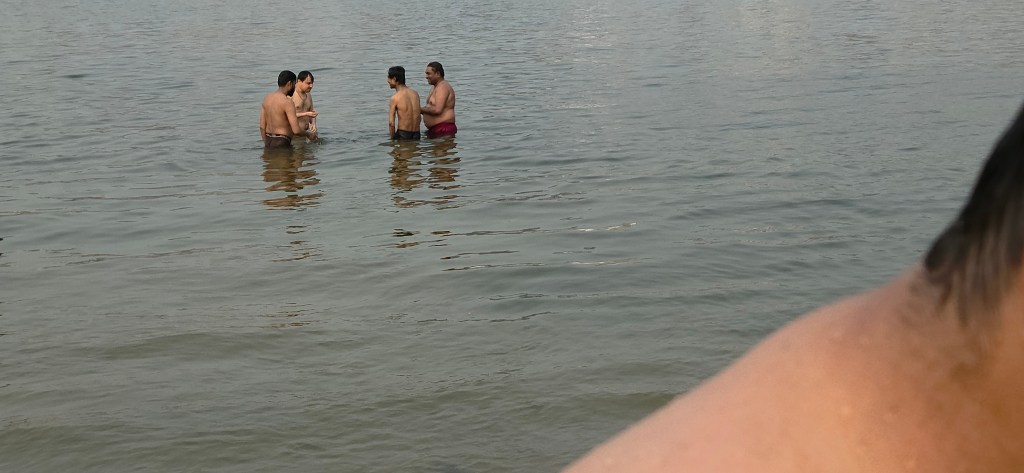
Dipping in The Holy Ganga River in VaranasiShortly, our feet began to freeze, so we came out of the water. The dry sand on the Ganga beach was warm, and that provided us a bit of comfort. We again went into the water, dipped ourselves well, as body temperature had adopted the chill by then.
Varanasi (Banaras) Tour: Walking on the Ganga Beach
Later, we walked on the sand, away from the river for some time, staring at the peaceful human-less area on the other side. I am fond of staring at trees, waters, sand, hills, and sky if there are no humans to distract my vision. This gives me immense pleasure; perhaps, my brain goes into a still condition. As I was feeling the bliss of the moment, the boat readied to return. So, we boarded the boat to return to the bank where the Kashi Vishwanath Temple is situated.
Varanasi (Banaras) Tourist Attractions: Kashi Viswanath Temple
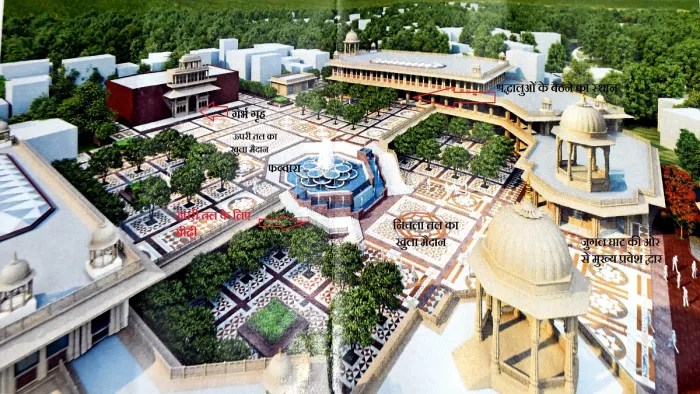
The boat dropped us at Dashashwamedh Ghat, from where we walked towards the newly developed Kashi Vishwanath corridor. As we had to have a glimpse of Shree Vishwanath Shiva-lingam, we had to place our luggage and phones in the clock room. The free cloak room is available just at the entrance of the corridor, though it takes a bit longer to submit the luggage.
As we moved forward, we realised that there was a long queue for the Vishwanath Jyotirling darshan. We occupied our place in the queue and started chanting “Har Har Mahadev”, which gave us energy to wait in the queue. The devotees returning told us that the queue was very long and we may need to wait for over four hours. We got disturbed a bit, but the chanting led by different people in the queue rejuvenated us. The queued devotees kept moving gradually, and we reached near the main temple premises in a couple of hours.
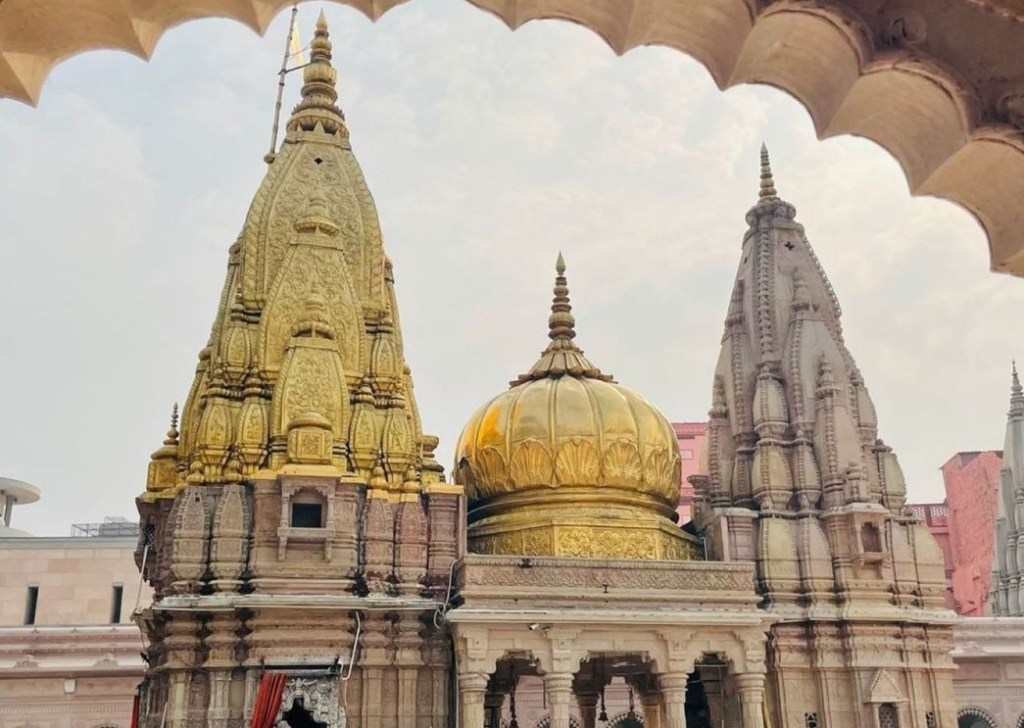
A Beautifully Captured Image of Shri Kashi Vishwanath Jyotirlinga TempleThe people managing the queue inside seemed very efficient to me. They were not letting devotees stay in front of the Vishweshwar Jyotirlinga for more than a few seconds but were also ensuring that everyone got a sight of the lingam form of God. Shortly, it was my turn to bless myself with the sight of Baba Vishwanath, and I was actually blessed with the pure feeling of witnessing God.
After that, we visited other small temples situated in different parts of the corridor. Many of them were looking like old temples, and the others were having the old God-idols. I think they were the old temples that were damaged during the development of the corridor. They have been restructured well, and perhaps the temples with old idols of deities were damaged completely, so they were redeveloped to house the same old idols.
Varanasi (Banaras) Tourist Attractions: A Walk to Namo Ghat
After leaving the Kashi Vishwanath corridor, we had some snacks nearby and walked towards Namo Ghat. It was a good 5-6 km walk, but it could not offer us any great experience due to the black, smoky air around.
This pollution was led by the diesel engines that were powering the boats in the Ganga River. It was so suffocating that we had to wear masks during the walk. I wish people to understand that protecting nature and the environment is the Dharma of each human.
On the way, we encountered a lemon tea-seller near Ram Ghat. He had flavoured the tea with the spices that had made it a combination of lemon tea and Shikanjee. It gave good comfort to our sore throats. As we walked further, we witnessed several small Shivlingams situated in the small blocks on the bank of the Ganga. If the environment were not polluted, sitting beside them would be a great experience.
We reached Namo Ghat in the evening and found it too polluted. In addition, it didn’t give any serene experience because it has been highly commercialized.
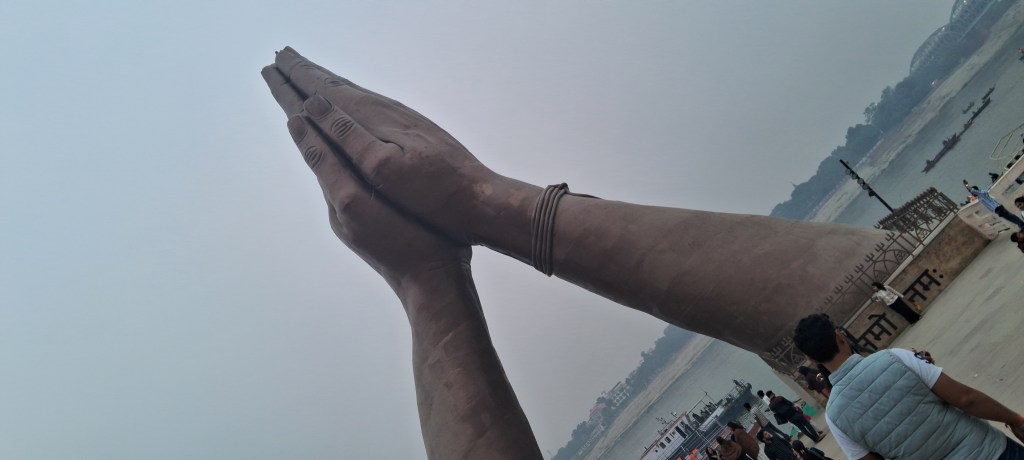
An image of Namo Ghat Plenty of restaurants, game zones, battery cars for kids, and many other activities have made it a shopping mall-like area. Therefore, we exited towards the city, had some Chinese food, which was awesome, and left for Varanasi Junction Railway Station. The battery rickshaw charge was ₹30 per person.
More Places to Visit in Varanasi
This was about the places that we visited. Let’s now discuss some places to visit in Banaras that we couldn’t.
Varanasi (Banaras) Tourist Attractions: Durga Temple Varanasi
The Durga Temple in Ramnagar, Varanasi, is a striking 18th-century shrine dedicated to Goddess Durga. It is renowned for its vibrant red ochre hue and unique blend of North Indian Nagara-style architecture with Bengali influences. The towering curvilinear shikhara and intricate stone carvings enhance its beauty. It stands within the sacred Durga Kund tank, enhancing its spiritual aura during festivals like Durga Puja. It is located across the Ganges in Ramnagar, nearly 12-15 km from the Kashi Vishwanath Temple.
Varanasi (Banaras) Tourist Attractions: Sankat Mochan Hanuman Temple
Sankat Mochan Hanuman Temple in Varanasi is a 16th-century shrine established by Tulsidas. It is known for its vibrant evening aarti and the belief that Hanuman Ji fulfils devotees’ vows. The temple draws massive crowds, especially on Tuesdays and Saturdays. The intricate architecture of the temple and a sacred pond enhance its spiritual ambiance. The temple is situated in Saptarishi Mohalla, approximately 3-5 km from Kashi Vishwanath Temple.
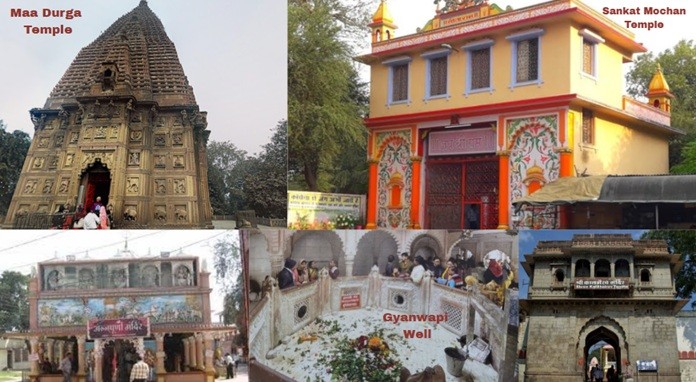
A Collage Displaying the Must-Watch Temples of Varanasi Varanasi (Banaras) Tourist Attractions: Kal Bhairav Temple
Kal Bhairav Temple is dedicated to the Bhairav form of Mahadev, who is believed to protect the city. It is said that Kal Bhairav grants permission for pilgrims’ visits to Varanasi. This temple was reconstructed, featuring ancient Nagara architecture, in the 17th century after earlier destruction during invasions. The temple is located in Vishweshwarganj’s Bharonath area, just 1-1.6 km from Kashi Vishwanath Temple.
Varanasi (Banaras) Tourist Attractions: Maa Annapurna Temple
Maa Annapurna Temple honours the goddess of food and nourishment, an incarnation of Maa Parvati. It houses a rare gold-plated idol returned from Prayag in the 20th century. The temple is famous for daily prasad distribution of kheer and its ornate South Indian-style gopuram with vivid murals. It symbolizes abundance and draws devotees for Annakut festival celebrations. The temple is situated in Visheshwarganj, merely 15 meters northwest of the Kashi Vishwanath Temple.
Varanasi (Banaras) Tourist Attractions: Gyanvapi Well
Gyanvapi Well, or ‘Well of Knowledge,’ is an ancient sacred kund adjacent to Kashi Vishwanath Temple. Lord Shiva manifested the Jyotirlinga here only, and a priest hid the original lingam here during Aurangzeb’s 17th-century invasion to protect it. Its mystical waters are said to bestow wisdom, with the site’s perimeter wall incorporating temple remnants. This makes it central to Varanasi’s spiritual and historical narrative amid ongoing cultural discussions. It is situated directly next to the grand Nandi statue at Kashi Vishwanath Temple in the northeast, viewable from the temple complex itself.
Trip to Varanasi (Banaras): Final Words
The Varanasi trip seems to be good for visiting the Kashi Vishwanath corridor and other temples. Dipping in the immaculate Ganga River is a must-do thing, but find a place where there are not many boats around. Walking in the narrow streets would give you a chance to taste delicious street food at affordable prices. For me, the gold-plated Kashi Vishwanath temple has been the best place I visited, and obviously Jyotirlinga Darshan too.


 Gupt Alok
Leave a comment